
Leak detection · Conway, SC
Leak Detection in Conway, SC: Meter Tests, High Bills and Hidden Leaks
Most hidden leaks give themselves away on a bill or a meter long before a wall stains. Here is how to confirm one yourself, what the signs mean and how a plumber finds the exact spot without opening more than needed.
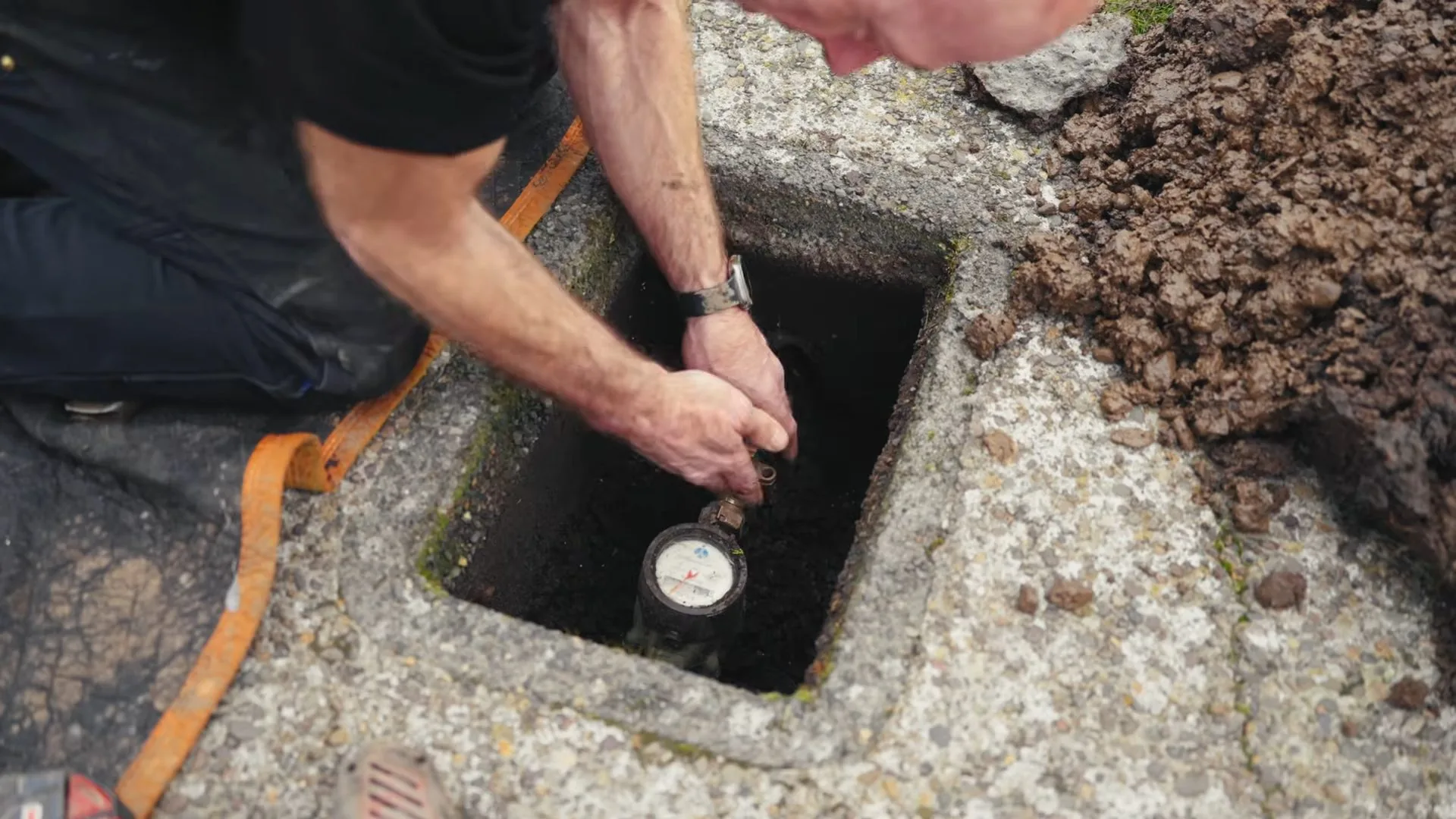
Start at the meter: is water actually leaking?
Residents of Conway reported water bills doubling or nearly tripling in August 2026, with no change in habits. The City of Conway said there is no single cause, that bills can lag a month or more, and that it wants customers to call 843-248-1780 so staff can review the account. A higher bill is not proof of a leak, and it is not proof of a billing problem either. The meter settles it.
- Turn off every tap, appliance and irrigation zone, and make sure no one is running a toilet or filling a pool.
- Find the meter box, usually near the street, and lift the lid carefully.
- Look at the leak indicator, a small dial or triangle, or note the digits.
- Wait fifteen minutes without using water and look again.
If the indicator spins or the digits move, water is escaping somewhere past the meter. If nothing moves, the household plumbing is tight and the bill question belongs with the utility.
Signs of a leak you cannot see
The meter test is the clearest check, but the house gives its own clues. A hissing or running sound when everything is off, a damp or musty smell, a stain that grows after rain or after a shower, paint that bubbles, a warm patch on a floor, soft baseboards, a sudden drop in pressure and a patch of lawn that stays green or soggy in dry weather all point to water going where it should not.
Catch it early and the repair is small. Left alone, a pinhole drip feeds mold, rots framing and swells flooring, and the cost climbs with the damage rather than with the leak.
How hidden leaks are located
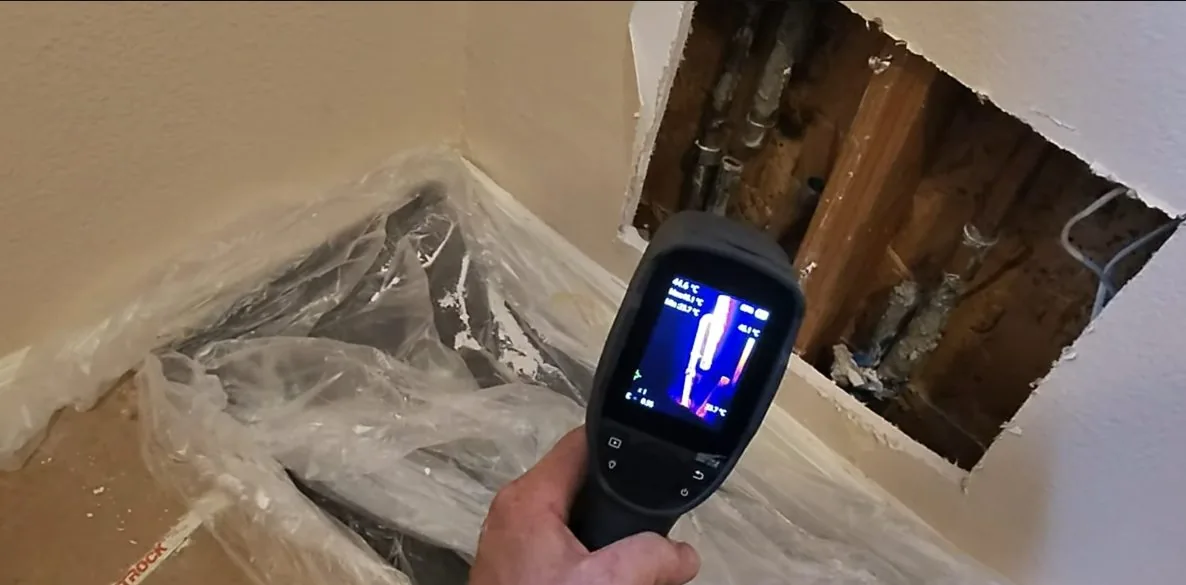
Once a leak is confirmed, the job is to find it precisely so that only the necessary section is opened. The tools fit the problem. Acoustic equipment listens for the sound pressurized water makes escaping a pipe. Electronic correlators compare that sound at two points to calculate the distance. Thermal imaging picks up temperature differences from hot-water leaks and wet insulation. Pressure testing isolates which branch of the system is losing water. Often two methods are combined to confirm a location before anything is cut.
The result is a marked spot and a plain-language explanation of what is behind it and what the options are.
Meter still moving with everything off? Call (833) 571-0120 and we will plan the test that finds the leak.
Leaks behind walls, in ceilings and under floors
A ceiling stain is rarely directly under the leak. Water follows framing before it shows, so the mark on the drywall and the source can be several feet apart. A wall leak at a supply line to a tub, a shower valve or an ice maker line often shows first as a swollen baseboard on the other side. Moisture meters and thermal imaging trace the wet area to its edge, and acoustic listening finds where it starts.
When the leak is under a slab floor, the process is different and is covered on the slab leak repair page. When a ceiling leak comes from the roof or a gutter, a roofer repairs the source, and a plumber confirms the water is not coming from supply or drain lines first.
Yard lines, irrigation and pool plumbing
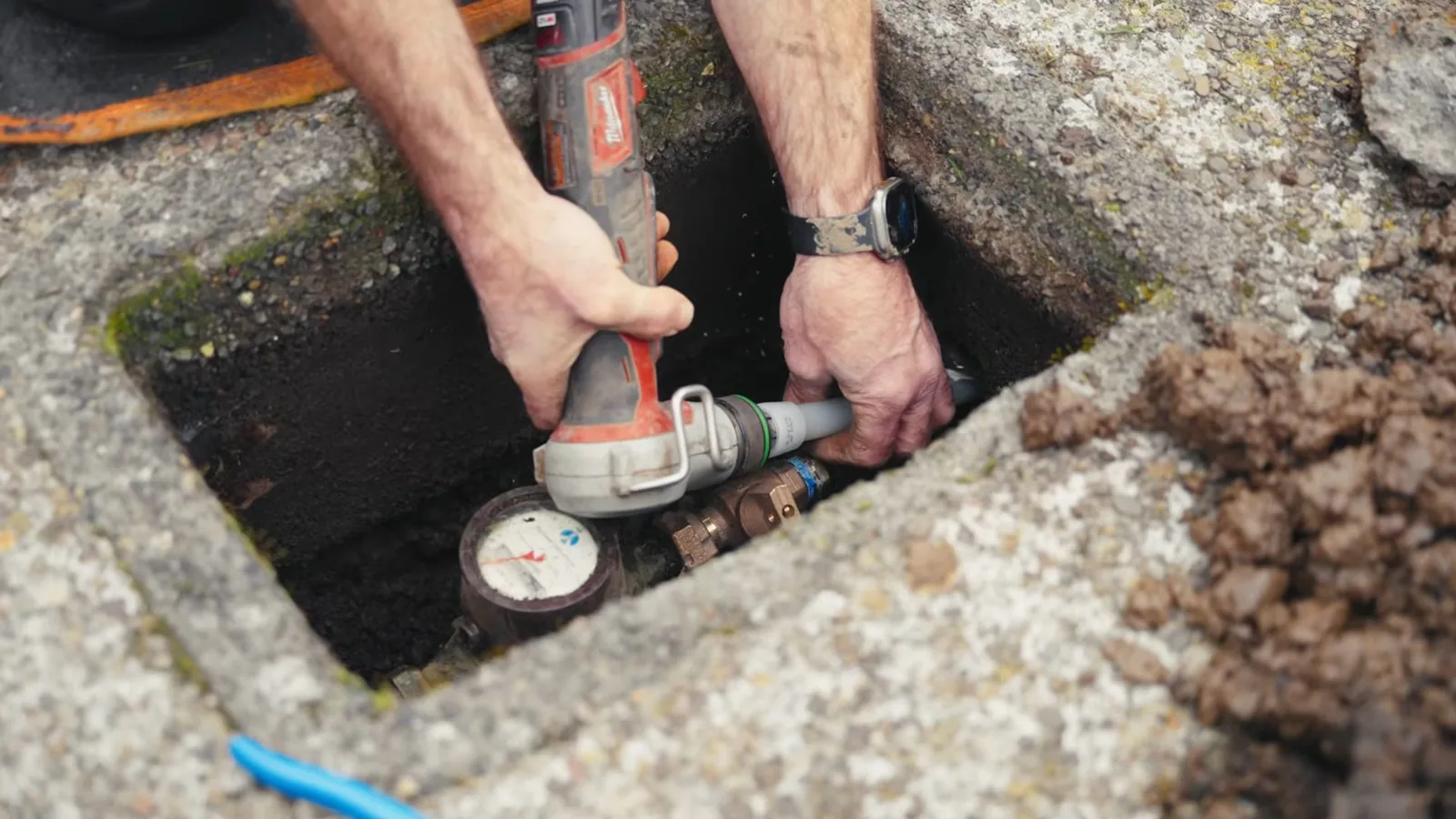
A leak in the line between the meter and the house can run for months without any sign indoors, because the water goes into the soil, where it may surface as a soggy patch or never show at all. A meter that moves with the house fully shut off, plus a wet or unusually green strip across the lawn, is the signature of a service line leak.
Irrigation systems leak at valves, risers and heads, and a stuck zone valve can run through a whole season. Pool and spa lines leak at fittings and equipment. Tell the plumber about all of these when you call so every possibility is tested. Where the leak turns out to be a broken line, the repair moves to the pipe break repair process.
Copper pinholes, older pipe and gas leaks
Pinhole leaks in copper show up as tiny green or white crusting, damp spots along a pipe run or a repeated drip that returns after repair. Polybutylene, a gray plastic supply pipe sold from about 1978 into the mid-1990s according to the sources we reviewed, fails at its fittings and is a known leak risk. Galvanized steel can rust closed from the inside and corrode through at joints. Whatever the material, leak detection identifies the failed section and shows whether it is isolated or part of a pattern.
A smell of gas is a different emergency. Leave the building and call Dominion Energy South Carolina at 800-815-0083 and 911. Pressure testing of the gas piping itself is covered on the gas piping repair.
Basements, lower levels and commercial buildings
Where a home has a basement or below-grade room, damp walls and floors are often a groundwater or drainage issue rather than a plumbing leak. Leak detection separates the two by testing the plumbing first. Business properties get the same method scaled to the building: meter test, section-by-section isolation, then locating. Describe the building and the water use when you call so the visit is planned correctly.
What happens after the leak is found
A found leak leads to a decision, not an automatic repair. You get the location, the likely cause and the choices: fix the leak, replace the section or treat a pattern of failures with something larger. Wet materials need drying quickly, and the water damage removal and drying page explains that step. For typical price ranges, see the plumbing cost guide, or find a nearby page such as Socastee plumbing or Myrtle Beach plumbing if you are outside Conway.
Think you have a leak? Call and describe it
Tell us what the meter is doing, where you see damage and how big the bill change is. We will walk through the next step.