
Trenchless pipe lining · Conway, SC
Trenchless Pipe Lining in Conway, SC: No-Dig vs Open-Trench Sewer Repair
Trenchless repair can save a driveway, a mature tree or a finished patio, but it fits some pipes and not others. This page compares the two approaches so you can see which fits a damaged Conway sewer line. Trenchless pipe lining and relining Conway SC jobs start with a camera look to see whether the old pipe can take a liner.
Trenchless and open-trench repair, side by side
Open-trench repair digs to the pipe, removes the failed section and installs new pipe. Trenchless repair works from small access points and either lines the old pipe from inside or pulls a new pipe through the old path. The right choice depends on the pipe's condition, depth, location and what is on top of it.
Where open-trench is the better answer
A fully collapsed line, a severe low spot that holds water, a pipe that has separated with soil washing in and a line that needs to change slope are usually better fixed by digging. A short, shallow section in open yard is often simplest to replace directly. The sewer line fixes covers that process, including the permit and 811 steps.
Where trenchless is the better answer
A line that is cracked, leaking at joints, rooted or corroded but still holding its shape and its slope is a candidate for lining. So is a line under a driveway, a slab, a tree-lined yard, a pool deck or any hardscape that you would rather not tear up.
How cured-in-place lining works
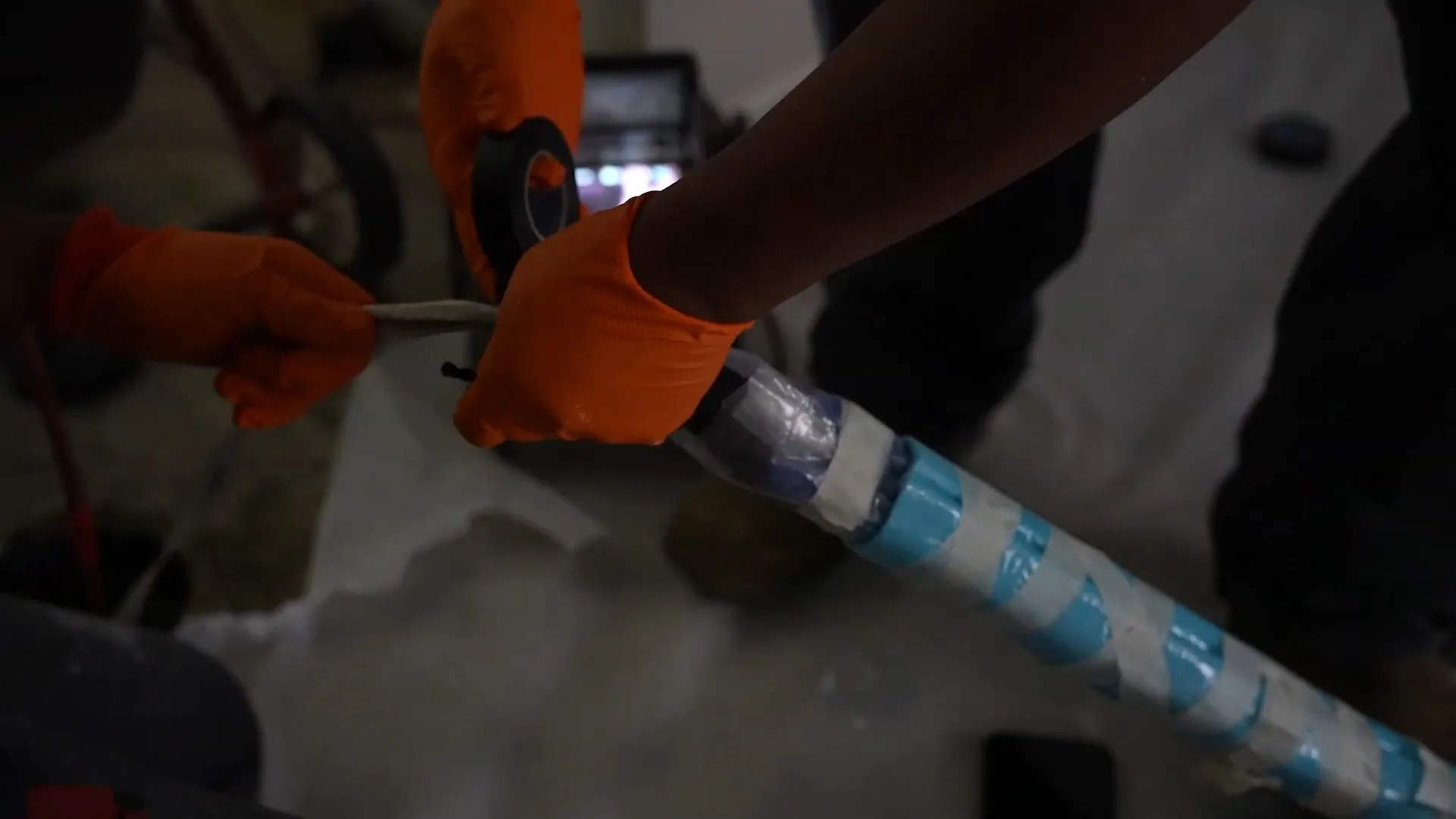
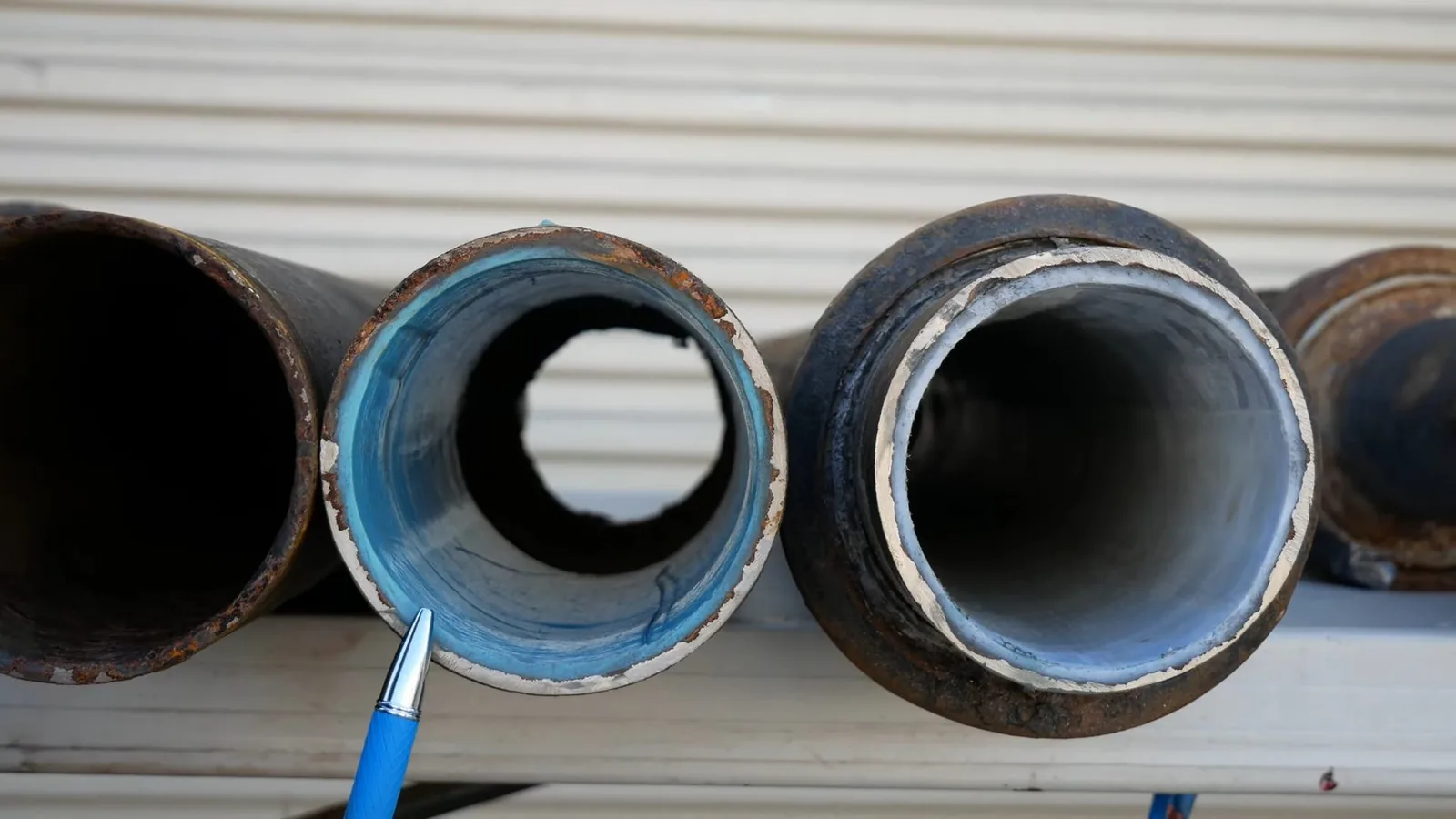
A flexible felt or fiberglass tube saturated with resin is pulled or inverted into the damaged pipe through a cleanout or a small excavation. The tube is inflated against the pipe wall and cured with hot water, steam or light. When the resin hardens, it forms a new pipe inside the old one, sealing cracks and joints and blocking roots. Lining reduces the inside diameter slightly, but the smooth interior often flows as well as or better than the pipe it replaced.
The line has to be cleaned and inspected first. A camera confirms the problem and the pipe's condition, and a cleaning pass, sometimes with water jetting, removes roots and buildup so the liner can bond.
Pipe bursting and pulling a new line
Where a line is too damaged to line, pipe bursting can replace it without a full trench. A tool pulled through the old pipe breaks it outward while a new pipe is drawn behind it. It needs entry and exit pits at the ends but avoids continuous digging. The method works best on a straight run of clay, cast iron or older plastic, and the plumber needs to know what else lies along the path before choosing it.
Is the line under a driveway or a tree? Call (833) 571-0120 and tell us where it runs.
What trenchless cannot do
Trenchless repair cannot restore a line that has fully collapsed, correct a sag that holds water or fix a pipe whose slope is wrong. It cannot reconnect a lateral that has been cut off or deal with a belly that needs regrading. It also needs a pipe straight enough and clear enough for the liner to travel through. A camera inspection shows whether the line qualifies, and an honest contractor will tell you when the answer is no.
Lining is also not a way around a utility's responsibility. If the failure lies beyond your property line, the utility is responsible for it. The exact boundary between public sewer and private lateral differs by address, and we did not find the written city ordinance language, so ask the utility where your lateral ends before you pay for a repair.
Questions to ask before agreeing to a liner
A lining job is only as good as the preparation and the materials. Ask who will inspect the line before and after, and whether you will see the footage. Ask what the liner is made of, how it is cured and what its design life is, and ask what the written warranty covers. Ask how the contractor will reinstate lateral connections cut off by the liner, and what happens if the liner will not fit. Ask whether the work will be permitted and who handles that. A contractor who can answer these plainly is likelier to do the job well, and one who cannot should not be given a high-ticket repair.
Whatever the method, keep a copy of the camera footage and the written scope. It documents the condition of the line and helps with a future sale or an insurance question.
Sewer responsibility: City of Conway, authority or homeowner
The City of Conway operates sewer inside the city limits and has said customers install their own cleanouts and that it does not rod a line under a house. The city's backup line is 843-248-1770. Outside the city, Grand Strand Water and Sewer Authority runs rural sewer and asks customers to call it first at 843-234-8460. For homes on septic tanks, this page does not apply.
Call 811 before digging, including for the small access pits some trenchless repairs need. Notice takes three to twelve full working days, public lines are marked and private lines are not. Permit rules depend on your address, and a lateral replacement is typically new work. For permits, call Construction Services at 843-488-9888 in the city or Horry County Code Enforcement at 843-915-5090 outside it.
What to ask for in writing before a lining job
Ask for the camera recording of the line before the work and another after it, so the condition of the old pipe and the finished lining are on record. Ask how long a section will be lined, how the lining will be reconnected to branch lines and the house connection, and what will be done if the camera finds a bellied or collapsed section that lining cannot fix. Those answers decide whether the job fits your line.
Slab and yard lines: where else trenchless is used
Some pressure and drain lines under a slab can be relined or replaced by tunneling rather than opening the whole floor, which can save flooring. Whether that suits a given leak depends on the line's layout and condition, and the slab leak fixes explains how the options compare. For lines elsewhere in the yard, the same camera inspection decides.
We take calls in Conway and in places such as Homewood plumbers, Aynor plumbing and plumber in Myrtle Beach. See the coverage area. South Carolina requires a license for residential plumbing work over $500; check one at verify.llronline.com.
Weighing no-dig against digging? Call us
Tell us where the sewer line runs, what is above it and what a camera has shown so far. We will say which method fits.