
Sewer line repair · Conway, SC
Sewer Line Repair in Conway, SC: What to Do First and Who Owns the Pipe
A sewer problem raises two questions at once: how do I stop the damage, and whose pipe is it? This page answers both for Conway, where the answer depends on whether you are on city sewer, on the Grand Strand Water and Sewer Authority or on a private system. Sewer line repair and replacement Conway SC calls begin with a camera look, so the repair matches what is actually wrong.
If sewage is backing up right now
- Stop using water. Every flush, shower and load of laundry sends more into a line that is already full.
- Keep people and pets out. Sewage contains bacteria. Avoid skin contact and do not walk through it barefoot.
- Find the cleanout. It is a capped pipe in the yard or near the foundation. If it is overflowing outside, the blockage is downstream of it, which points toward the main or the city's side.
- Call the right party. On City of Conway sewer, its backup line is 843-248-1770. On the Grand Strand Water and Sewer Authority system, the authority asks customers to call it before calling a plumber, at 843-234-8460, or 843-443-8200 after hours.
- Call us at (833) 571-0120 for anything on your side of the property line, and let us know what the utility said.
If the cleanout stays dry and the backup is only in the house, the stoppage is probably within the house line, and drain clearing may solve it. If clearing does not hold, the line needs a camera.
Who is responsible for which part of the line
The City of Conway runs the sewer inside the city limits, and its FAQ makes the split clear in practical terms: customers install the cleanouts on existing sewer services, and the city does not rod a line that runs under a house. Outside the city, the Grand Strand Water and Sewer Authority operates rural sewer and also offers an optional service line maintenance program. Homes on septic tanks are outside this page. The exact point where the public line ends and the private lateral begins differs by property, and we did not find the written ordinance language, so ask the utility to confirm where your lateral ends before authorizing a major repair.
A good rule: if the camera shows the failure beyond your property line, the utility owns the repair. If the failure is between the house and the property line, the repair is yours.
Camera inspection comes before repair
Guessing at a sewer problem is expensive. A camera pushed through the cleanout shows the pipe from the inside: roots entering at joints, grease and scale narrowing the line, a section that sags and holds water, a joint that has separated or a collapse. The footage identifies the depth of the problem and its location along the line, which determines whether the fix is a short spot repair, a longer replacement or a no-dig option.
Inspect before a home purchase, after repeated backups or after any storm that left the yard soggy and the drains slow. The visit costs far less than digging in the wrong place.
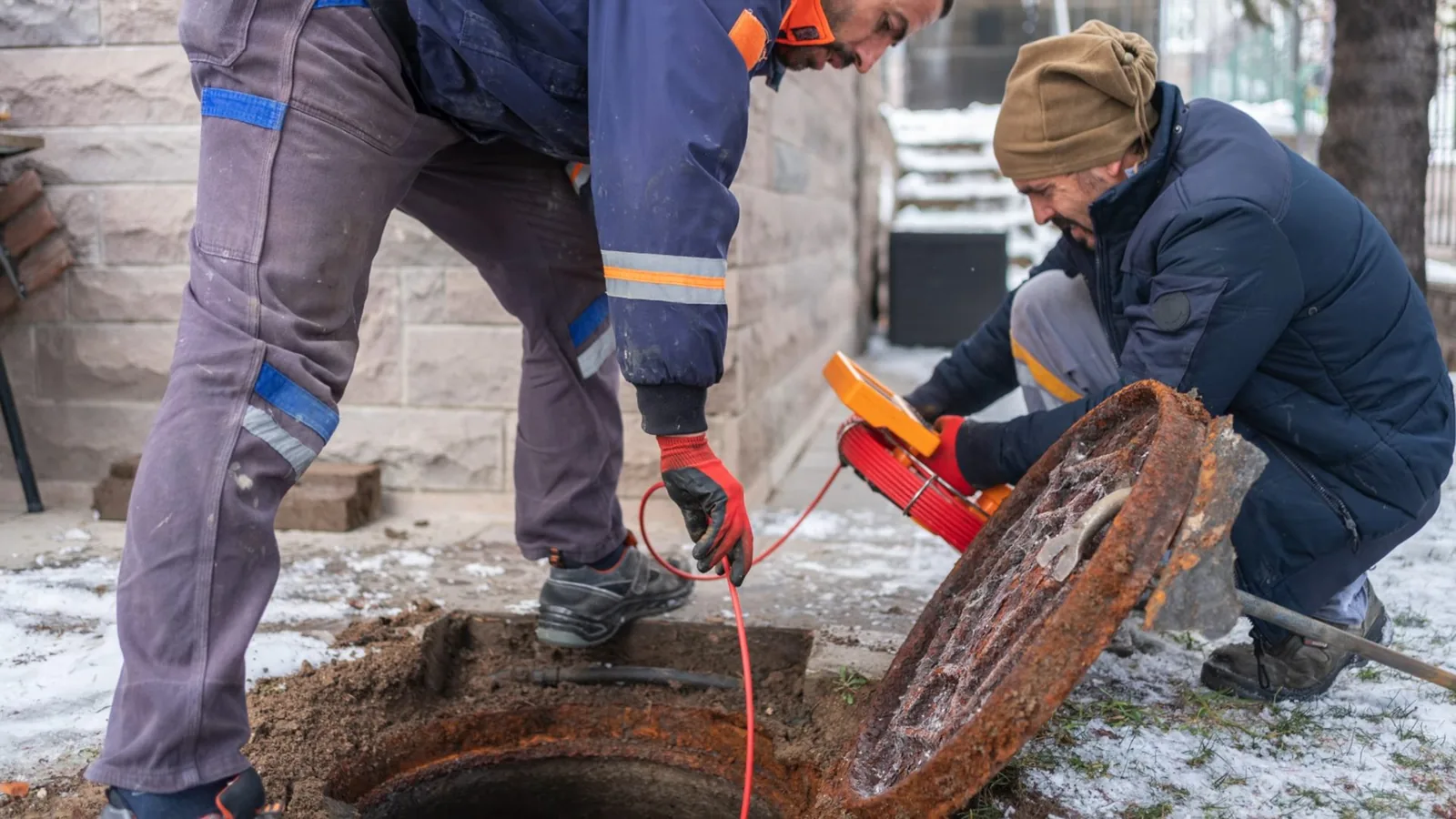
Backup in the house and the cleanout is full? Call the utility first, then (833) 571-0120 for the private side of the line.
Main line cleaning and snaking
A large cutting head on a heavy cable can clear roots, grease and debris from the main line when the pipe itself is still sound. This is the right first step for a stoppage with no structural damage. It is not a repair. A line that clogs again within a few weeks is telling you something is wrong with the pipe, and the camera finds it. For heavy buildup that a cable only punches through, see high-pressure jetting.
Sewer lateral repair and replacement
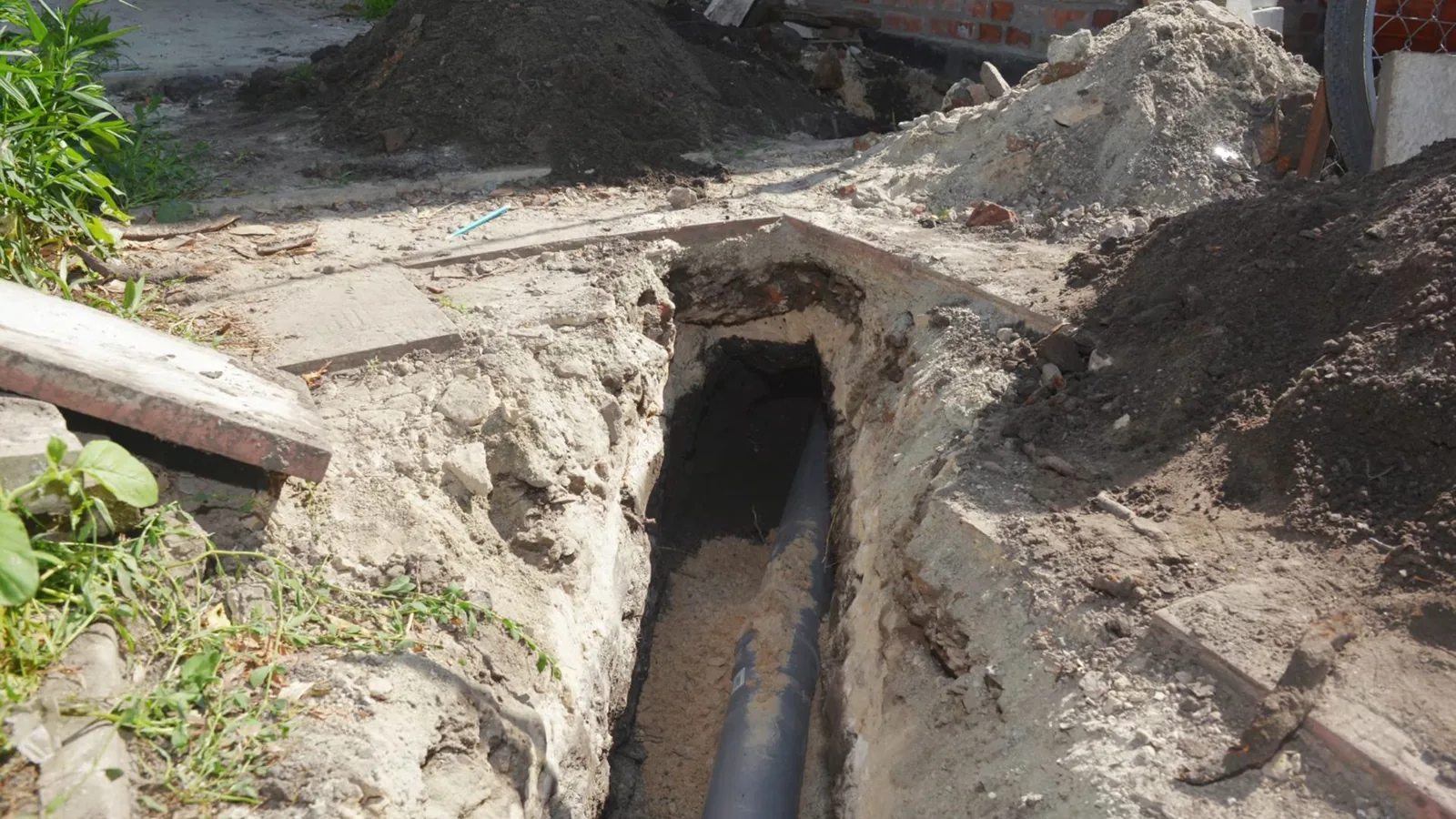
When a line is cracked, bellied, offset or collapsed, cleaning cannot fix it. A spot repair replaces only the failed length, with an excavation sized to the problem. A full replacement is considered when the pipe is failing along most of its length. Older clay and cast iron laterals fail at joints and by cracking, while plastic lines fail from settlement and poor bedding. Excavation requires a call to 811 beforehand, which takes three to twelve full working days and marks public lines only, so we plan the dig around that lead time. Private lines on your property are not marked, which is why a camera trace matters.
If the section is deep, under a driveway or tree-lined, ask about the no-dig alternative on the no-dig sewer repair.
After a flood or a long rain
When Hurricane Florence pushed the Waccamaw River past 21 feet at Conway in September 2018, a sewage plant in the Conway area flooded and lost power, untreated wastewater reached a tributary of the Waccamaw, and officials warned that flooded pump stations can spill sewage into neighborhoods, according to reporting by the Post and Courier. The lesson for a homeowner is simple: floodwater and saturated ground can overload sewers, and floodwater itself may carry sewage. Do not wade through it, do not run drains until the water recedes and call the utility first for a public-side issue.
Some homes install a backwater valve, a one-way device that keeps sewage from flowing back into the house. We did not find local guidance from the city or county on when one is required or advised, so ask the building office whether a permit applies before installing, and discuss with a plumber whether one suits your line.
Business and multi-unit sewer lines
Commercial and multi-unit properties have larger lines, heavier grease loads and fewer options for shutting off the building while work happens. The method is the same: camera first, then clean, repair or replace. Tell us the building type, the number of units and how long the problem has been happening, so the visit is planned for the right equipment and access.
Permits and who to check with
Horry County's code exempts stopping leaks and clearing stoppages, but replacing concealed pipe counts as new work and needs a permit, so a sewer lateral replacement should be checked before it starts. The City of Conway's 2026 to 2027 fee schedule lists sewer permit types, and Construction Services is at 843-488-9888. Inside unincorporated Horry County, Code Enforcement is at 843-915-5090. We did not find dollar fees published, so confirm both the permit requirement and the cost before work begins. South Carolina requires a license for residential plumbing work over $500, and you can check any plumber at verify.llronline.com.
Sewer calls come from the city and areas such as Tiger Grand, plumber in Socastee and plumber in Aynor. The service area page lists them all.
Sewer problem? Call before the damage spreads
Tell us whether the backup is in the house or the yard, who you have already called and where the cleanout is. We will say what we can do and what falls to the utility.